
Strategies for reducing packaging costs
Many companies face the challenge of reducing their packaging costs without compromising on quality, protection or delivery times. We’ll show you how you can achieve measurable cost savings through careful material selection and process optimisation, and share our expertise on efficient packaging with you. This will enable you to maximise impact whilst minimising the use of packaging materials and save time.
The following strategies highlight key levers for optimising costs in the packaging and dispatch process.
Reduce material costs

Often, more material is used than is necessary to protect the product. By choosing lighter, recyclable or more efficient materials, you can avoid overpackaging and reduce direct material costs. This is particularly relevant if materials incur additional taxes or disposal costs. Based on a thorough packaging test, we identify ways to reduce material costs without compromising on results.
Adjusting packaging size
Find the optimal balance between as few packaging variants as possible and the smallest possible packaging for each product.
Changing the material
Sometimes it is worth taking a look at the material. Perhaps wood is not necessary at all, and cardboard would do the job just as well? And switching from plastic to paper can be a way to reduce the use of plastic in your packaging.
Anpassung der Materialqualität
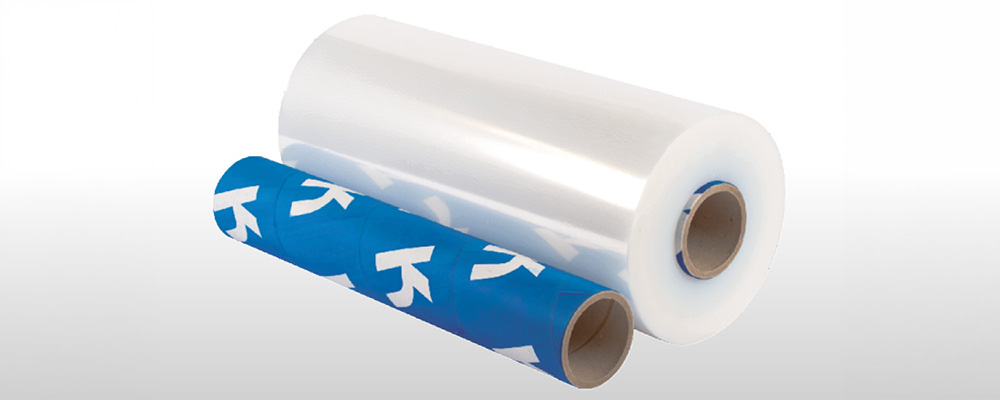
Often, the requirements are not as high as expected and cheaper materials can be used. Conversely, a supposedly inexpensive stretch film may end up being more expensive than the more economical high-performance film, which often offers more protection with less material.
New packaging solution
Could a reusable solution be an option? This saves ressources and money.
Adjustment of the packaging machines used
Often, a smaller paper cushion or one less layer of wrapping on the pallet is enough to protect your products safely.
Optimise processes

Many companies incur unnecessary costs due to inefficient packaging processes, e.g. tedious manual procedures or interlocking process steps without a clear structure. Automation, well-designed packing stations and close integration of packaging and logistics can significantly increase efficiency, saving working time and reducing errors.
Most packaging processes offer potential for optimisation.
We work with you to analyse your processes and make them faster, easier and safer.
Lower complaint rates

Product damage and returns due to inadequate packaging drive up costs. While excessive packaging causes unnecessary material costs, too little packaging or the wrong solution leads to product damage. Improved protective solutions, targeted simulation tests and suitable internal padding can reduce complaints and the associated replacement costs.
Cut freight expenses

Whether you use shipping containers, freight forwarders, postal services, or your own fleet, transport volume and weight add to your costs. With optimised packing density, targeted weight reduction, and better utilisation of transport units, you can cut freight expenses in the long run – without compromising on product protection.
Packing density optimisation
The inner packaging is consistently aligned with the geometry of your product. The aim is to minimise empty spaces and make the package as compact as possible – while maintaining the same level of protection. This reduces the shipping volume at the product level.
Weight optimisation
We reduce the total weight of the package by carefully selecting and combining suitable packaging materials. Lighter materials with the same function reduce transport costs, especially with weight-based freight rates.
Optimisation of capacity utilisation
At the next level, we consider the transport unit: stackable, standardised packages allow the volume of pallets, containers or trucks to be used optimally. This means that less ‘air’ is transported and the costs per unit are significantly reduced.
When goals are mutually exclusive, we find your individual middle ground.
Save on disposal costs

The disposal of packaging material is not only a question of sustainability, but also a question of cost. Fortunately, there is a significant overlap between the two. The ‘reduce, reuse, recycle’ approach not only leads to a lower environmental impact, but also to a lower impact on your wallet. We will show you where your potential lies:
Reduce
We will review where you can reduce material usage, for example by using higher-performance, downgauged stretch films.
Reuse
Reusable solutions can also be developed for applications where you may not yet have considered reuse.
Recycle
Mono-material solutions — that is, single-grade packaging products — are easier and more cost-effective to recycle, helping you to reduce costs further.